

Boundary Walls
The Hidden Vulnerabilities in Our Historic Built Environment
By Gillian Murray BSc (Hons) MRICS
Managing Director at Slipperfield Building Consultancy Limited
Boundary walls are often overlooked in the broader conversation about historic building conservation. Yet, they play a vital role in defining property limits, supporting adjacent structures, and contributing to the character of our built heritage. As a building surveyor working with historic buildings, I’ve seen first-hand how these walls can quietly deteriorate until failure becomes dramatic and costly.
Common Causes of Boundary Wall Failure
Salt Contamination and Stone/Brick Decay
Boundary walls constructed from porous stone or brick are particularly vulnerable to salt migration. Groundwater or de-icing salts can be drawn into the stone o rbrick through capillary action. As the water evaporates, salts crystallise within the pores, leading to spalling, surface erosion, and eventual structural weakening.
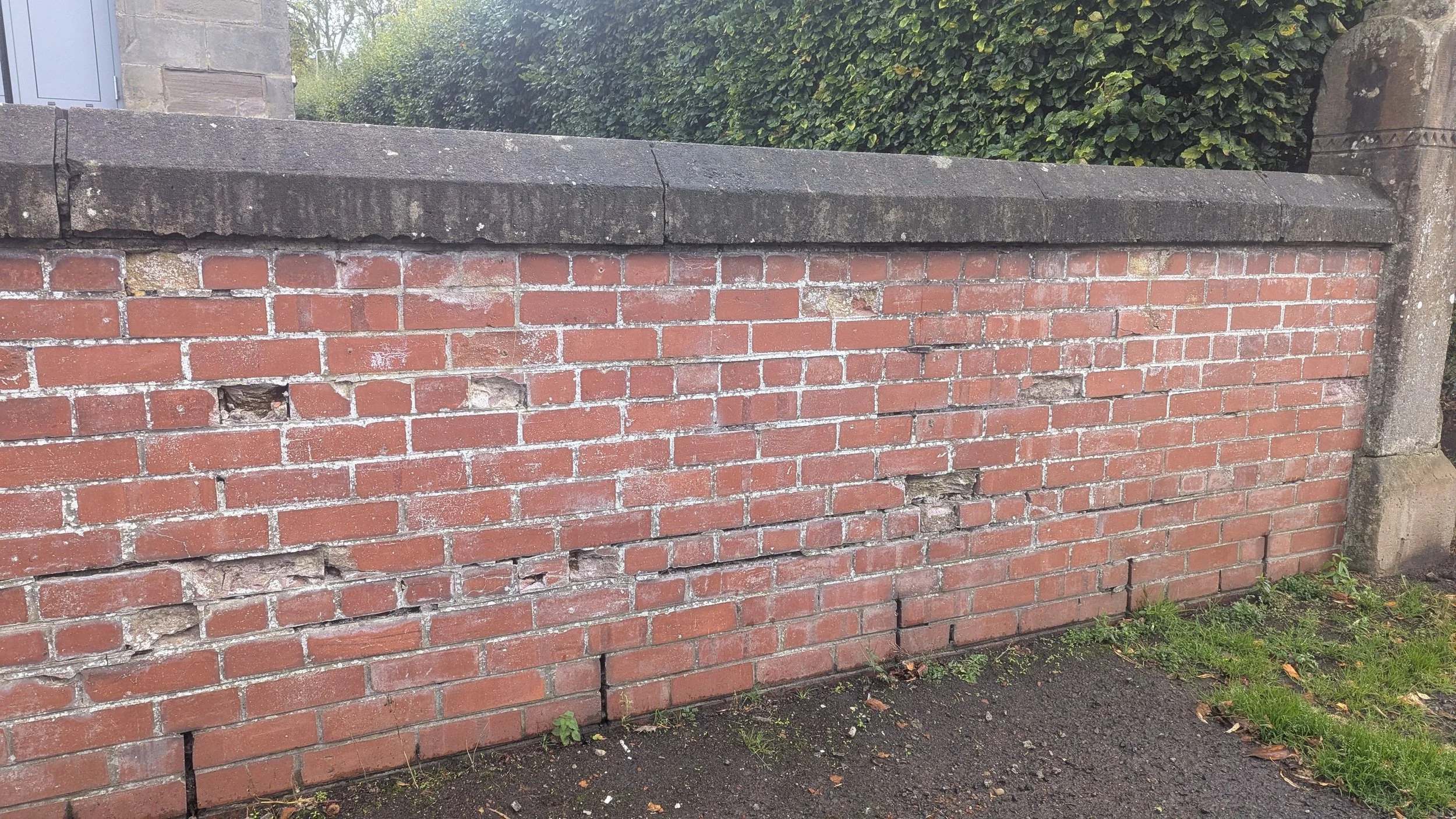
A brick wall with raised ground levels to the car park on the other side.
Inappropriate Cementitious Mortars
Modern cement mortars are often mistakenly used in repairs to historic walls. These mortars are too rigid and impermeable, trapping moisture within the wall and accelerating decay of softer masonry units. Over time, this leads to cracking, delamination, and loss of historic fabric.
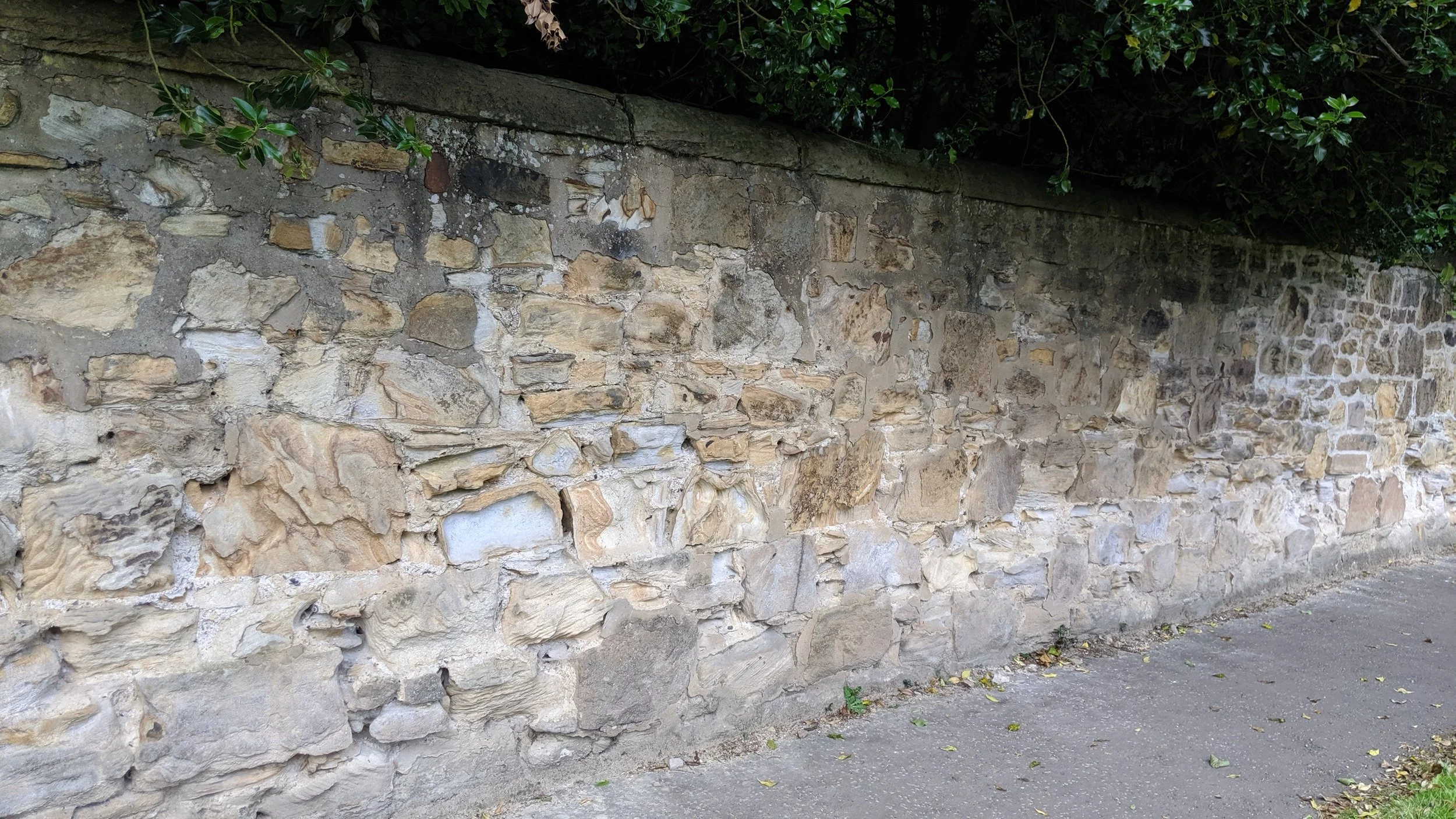
Signs of cementitious mortars and associated stone decay; wall is on a main road and regularly splashed by gritting salts rainwater
Storm Damage
High storm winds exert significant lateral forces on boundary walls, particularly those with pre-existing weaknesses such as deteriorated mortar or inadequate foundations, and the likelihood of collapse is higher. Driving rain accelerates water ingress through damaged copings and open joints, saturating the wall core. When followed by freezing conditions, rapid freeze-thaw damage and spalling are also usually worse. Post-storm inspection is essential but if you know that a storm is coming in and you have vulnerable walls, you should consider preventative measures to reinforce the walls.
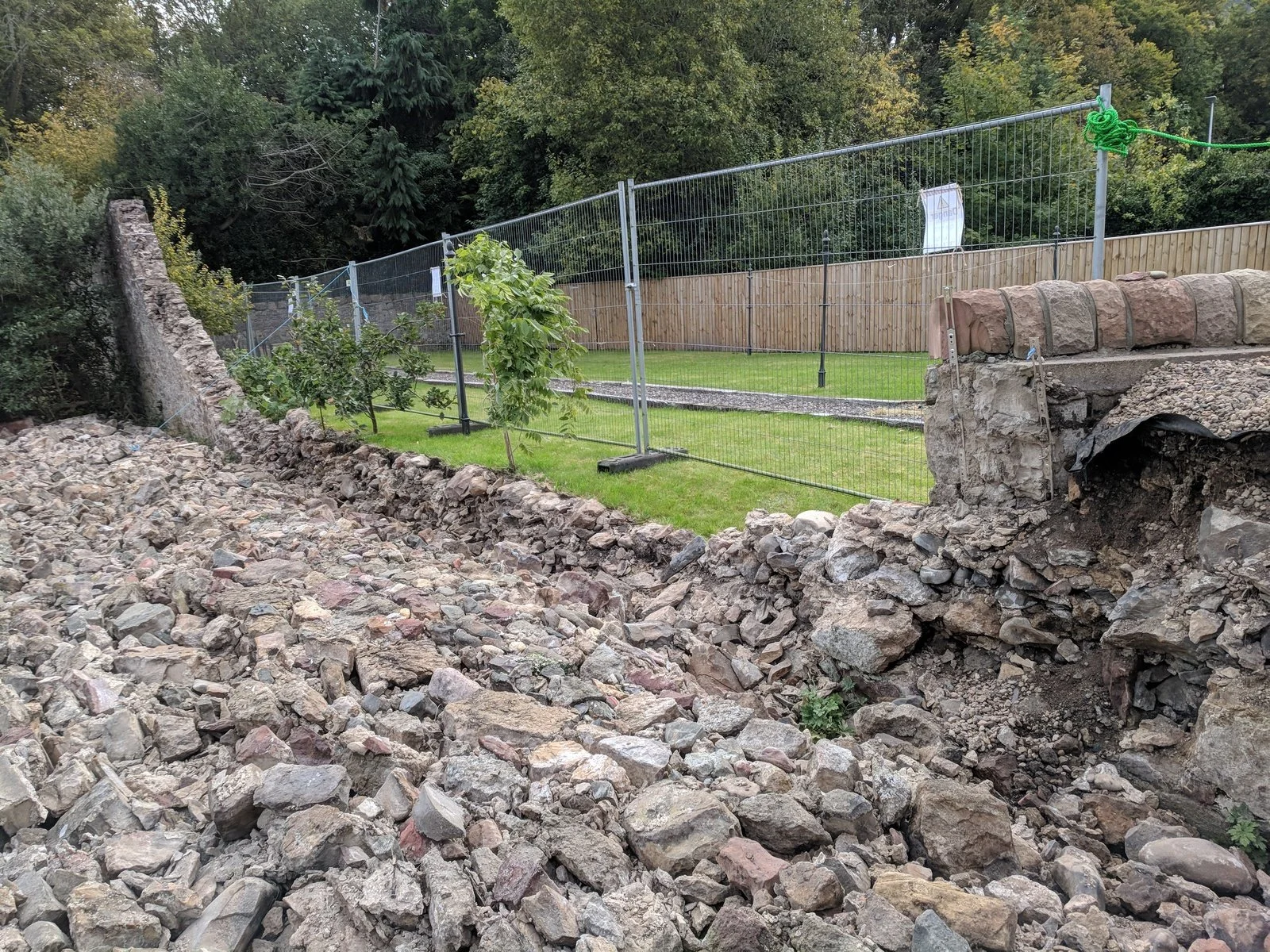
Storm damage collapse
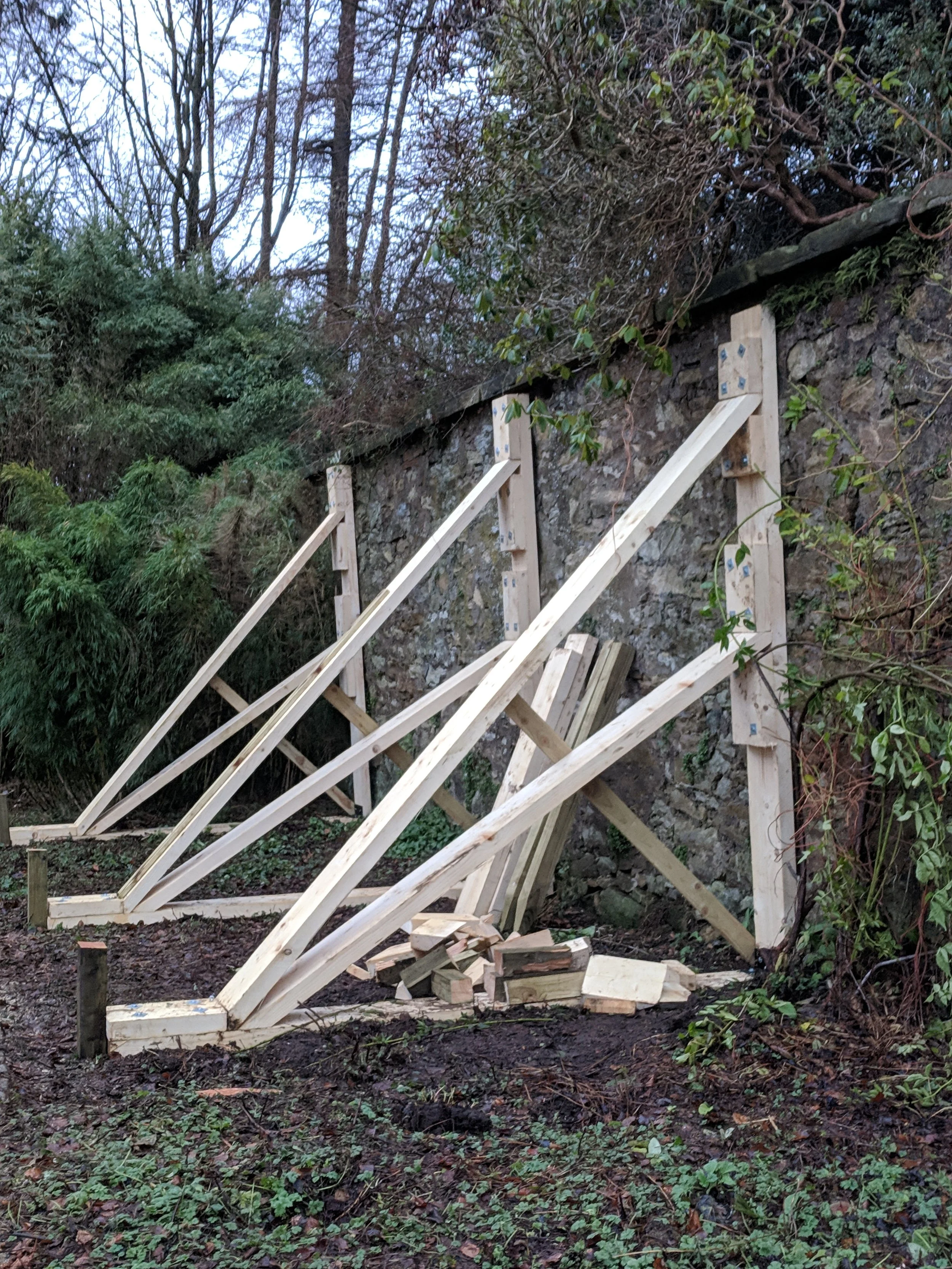
An example of temporary buttressing to a vulnerable wall
Ground Level Deterioration and Rotational Collapse
Boundary walls are particularly susceptible to deterioration at their base, where splashback, rising damp, and frost action are most aggressive. In walled gardens, the risk is enhanced where raised ground levels on the outside act against reduced ground levels on the inside where garden beds soils have compacted or reduced in volume over the years. This loss of material on one side at ground level can undermine stability, leading to foundational rotation and collapse.
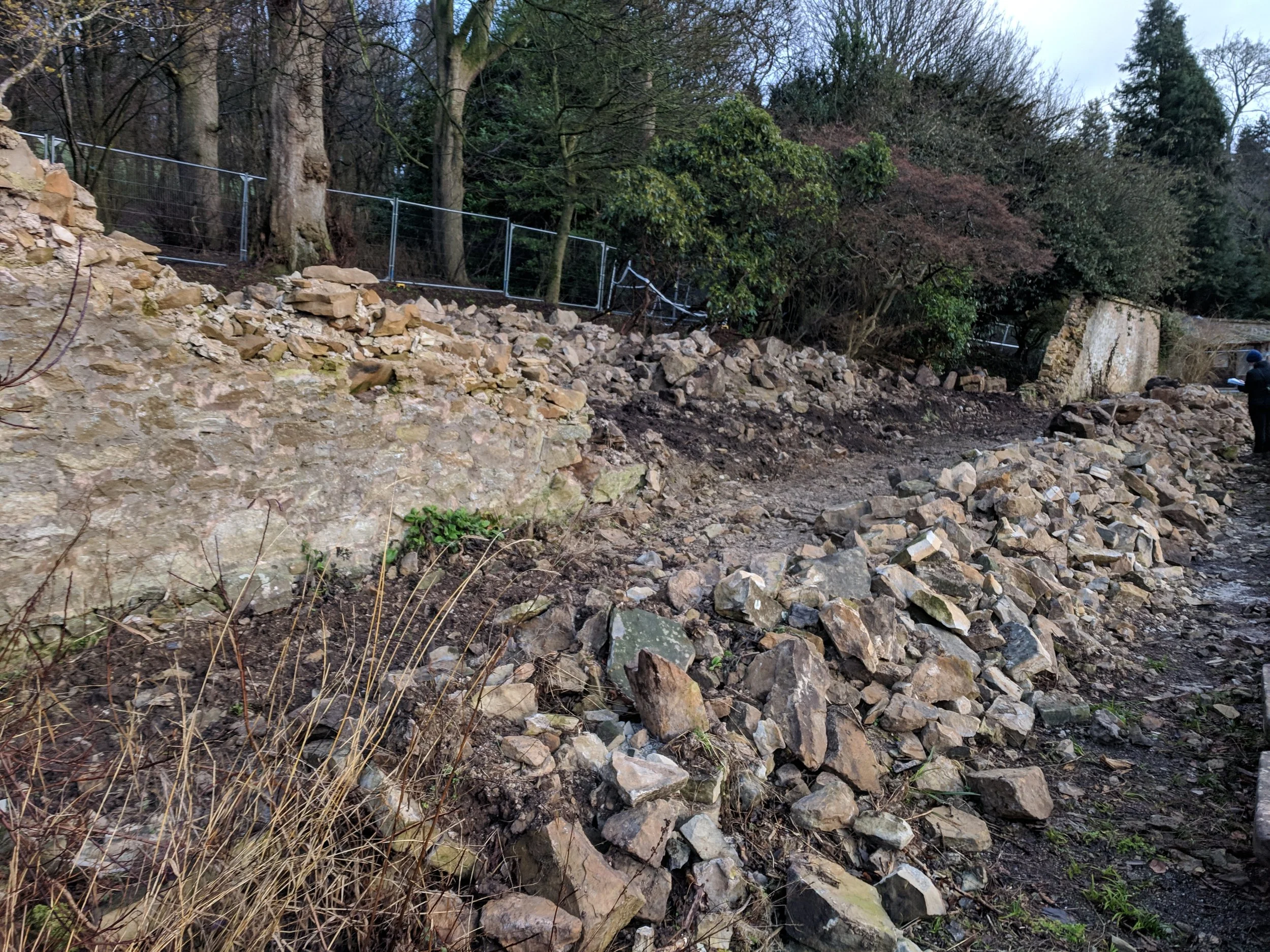
This wall at Hill of Tarvit Mansion House collapsed in January 2019 (photo shows the stone cleared to allow wall to be made safe)
Wall Head Deterioration and Loss of Integrity
The wall heads of boundary walls represent one of the most exposed and vulnerable elements of any boundary wall. Coping stones, when present, bear the brunt of weathering, freeze-thaw action, and thermal movement. Failing pointing and bedding mortars contribute to saturated masonry and loss of structural integrity.
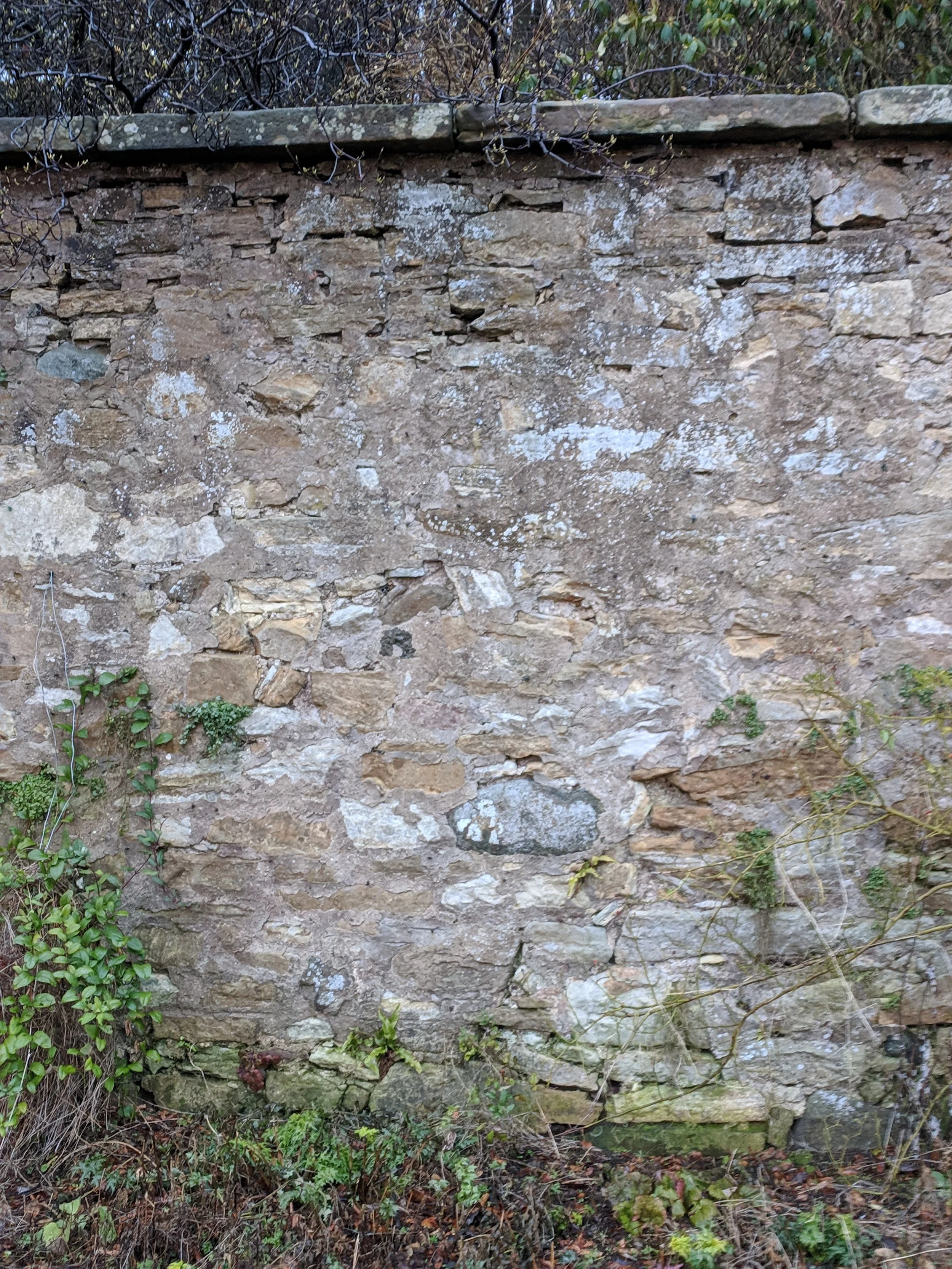
Open joints to the wall heads and failing pointing at the base of the wall
Vegetation and Root Damage
Self-seeded trees, ivy, and other vegetation can wreak havoc on boundary walls. Roots penetrate joints and widen cracks, while foliage traps moisture against the wall surface. Ivy, in particular, can mask structural issues until they become severe. Branches leaning on wall heads and moving with the wind can gradually damage and displace cope stones, pointing and bedding mortars.
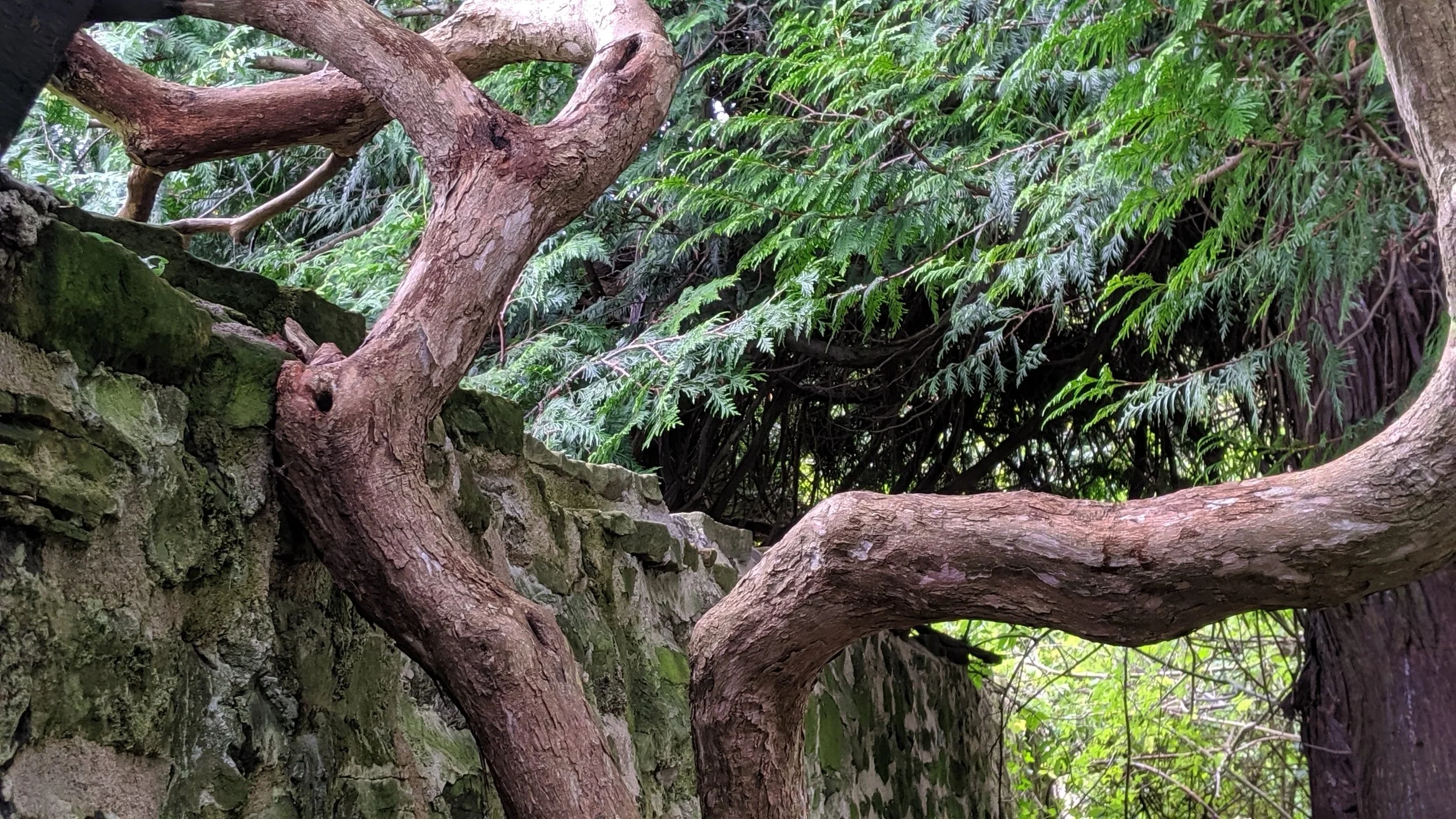
A heritage specimen tree adversely affecting the walled garden boundary wall head
Impact Damage from Vehicles
In urban and rural settings alike, boundary walls are vulnerable to vehicular impact. Even minor collisions can dislodge stones or bricks, compromise structural integrity, and necessitate costly repairs, especially if the wall is load-bearing or retaining.
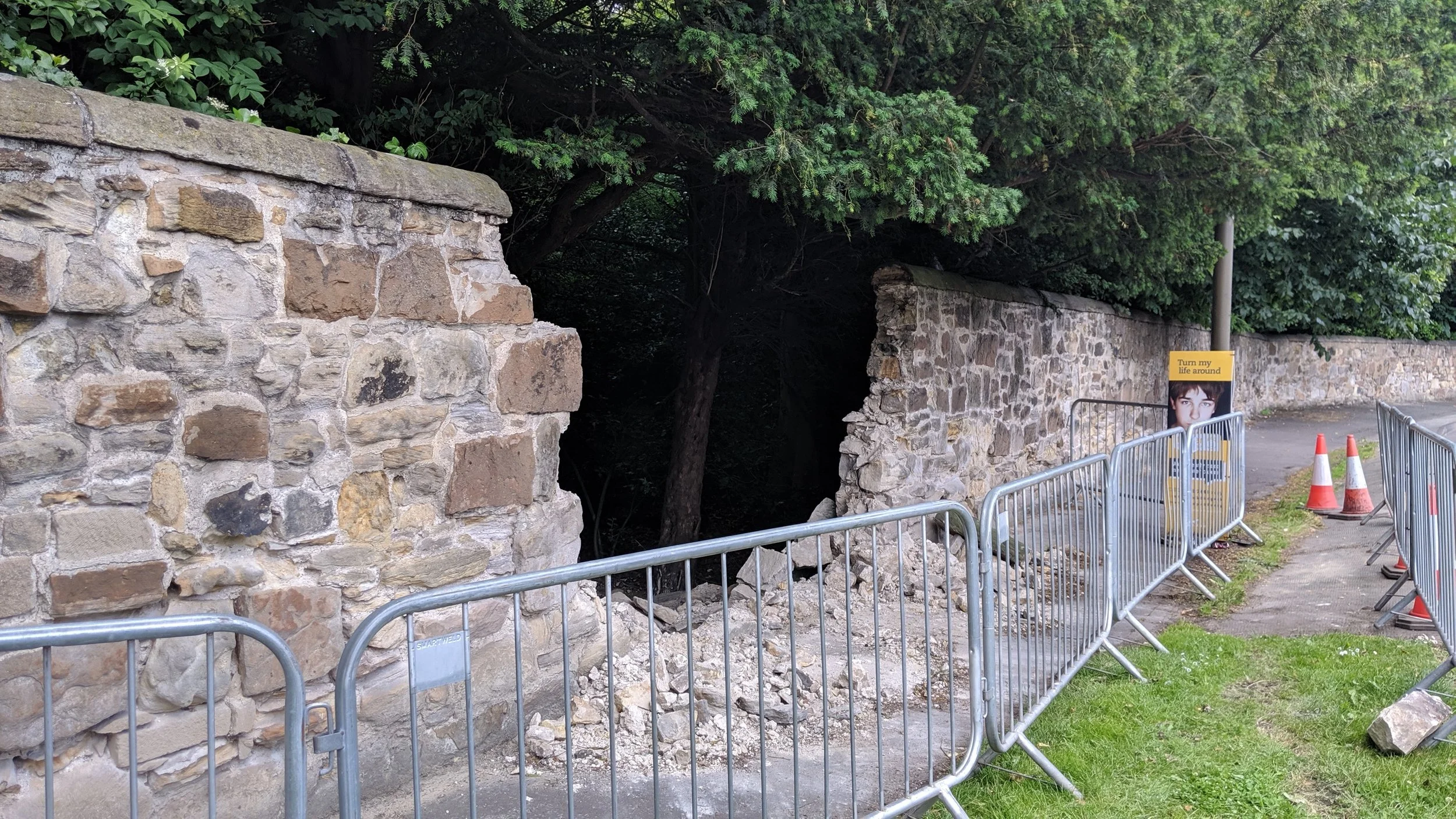
Impact damage to an estate boundary wall caused by a vehicle
So, What Can Be Done?
Regular Inspections
Routine visual inspections, especially after storms or freeze-thaw cycles, can identify early signs of distress. Look for bulging, cracking, vegetation growth, and mortar loss. A professional condition survey every few years is a wise investment.
Use of Appropriate Materials
Repairs should always be carried out using compatible materials. Lime mortars, for example, offer flexibility and breathability, allowing moisture to escape and reducing the risk of trapped water and decay. Matching the mortar to the original composition is key to long-term performance.
Vegetation Management
Control of vegetation is essential. Ivy should be carefully removed, and tree roots monitored or redirected. In some cases, root barriers may be necessary to protect the wall’s foundation. Where the vegetation is itself of historic importance, for example in a designed landscape, or protected by other means, cradles can sometimes be formed to lift the the plant off of the wall head so pruning or removing the plant is not always needed.
Structural Reinforcement
Where buttresses have been removed or ground pressure is high, consider reinstating structural supports or installing discreet reinforcement. This must be done sensitively to preserve the wall’s historic character. Temporary bracing can be effective while planning, budgetary or other constraints are addressed.
Impact Protection
In high-risk areas, installing protective bollards or barriers can prevent vehicle damage. These should be designed to complement the setting and not detract from the historic environment.
Conclusion
Boundary walls are more than just property lines, they are integral components of our historic landscape. Their preservation requires thoughtful inspection, appropriate materials, and a deep understanding of traditional construction techniques.
By addressing the common causes of failure proactively, we can ensure these structures continue to stand for generations to come.
Contact Us for Advice
We have extensive experience in managing the maintenance and repair of boundary walls. Contact us to see how we could help. Click here to email.